
Leaving the EU and Common Agricultural Policy has presented UK farming with the biggest challenge in a generation.
With new legislative powers at the UK's disposal, a new agenda was set for the future of farming as part of the 25 year Environment plan.
To meet non-disclosure agreements, information maybe obfuscated. Views written are my own.

Background
Agricultural Environmental Schemes (AES) have been a part of the farming landscape for over 20 years, designed to offset the environmental impact of intensive farming.
However, due to low uptake, AES have historically struggled to achieve significant environmental improvements, which often take years to materialise and are challenging to quantify.
The challenge
Our aim was to create a more cohesive experience for farmers and foresters applying for AES, aligning with the objectives of the 25-Year Environment Plan.
Interaction design
Taking forward research insights to create and validate accessible service journeys that supported users and enabled DEFRA's environmental policies:
- Supporting user research and analysis
- Capturing and prioritising assumptions to test
- Sketching preliminary journeys and drafting content for interfaces and guidance
- Building accessible, responsive HTML / CSS prototypes to test assumptions
- Iterating journeys to simplify and optimise user experience
- Working to GOV.UK design patterns

Service design
- Working closely with Defra's Policy team, Forestry Commission, Environment Agency and Natural England to determine goals and scope.
- Meeting with a wide range of service users to understand their needs, experiences and identify opportunities.
- Collaborate with technical teams to design around constraints and create a viable end-to-end service that delivers policy objectives.
- Formulating and running internal workshops, conducting analysis and building evidence to drive design decisions.


Design Sprint
The following case study details a 5 day workshop conducted with the Environmental Land Management (ELM) and Tree Health policy teams as part of our wider Alpha work.
We were keen to explore how we could encourage different workstreams to work together to help deliver positive policy outcomes whilst supporting the needs of our service users.
Bringing together the right people for the amount of time needed was one of our biggest challenges. After some convincing (and diary juggling) we confirmed our invites and set a date.
We based our workshop on Google Venture's process. If you're interested in running your own event, GV provide more detailed information (opens in a new tab).
Goals
Programme level
- Investigate how design thinking can be applied to policy design
- Create wider awareness of user centred design methods to deliver tangible learning and help de-risk delivery
- Build a workshop format which can be reused to enable rapid learning across other workstreams
Service level
- Create common understanding of the ELM / Tree Health problem space
- Drive policy discussion and expedite decision making
- Generate and evaluate ideas, build a narrative and prototype
Scenario
Tree Health, Forestry Commission and ELM identified a candidate problem to focus the design sprint activity:
A land manager receiving ELM payments finds a tree disease in their woodland.
We explored this scenario from a user’s perspective and investigated a simple service design which supported wider tree health resilience.
Start at the end

Sprint goal
We discussed and agreed what a successful outcome looked like:
Our services support and incentivise woodland managers toward good behaviours which deliver a resilient woodland landscape.

Sprint questions

Mapping the problem

Ask the experts


Sketch ideas

Pick a target

Lightning demos
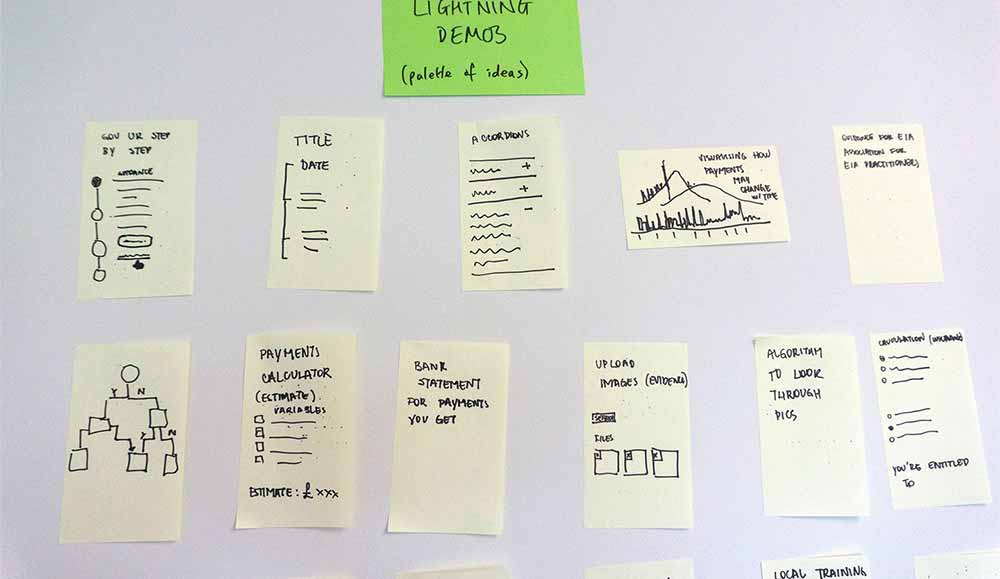
Sketch ideas
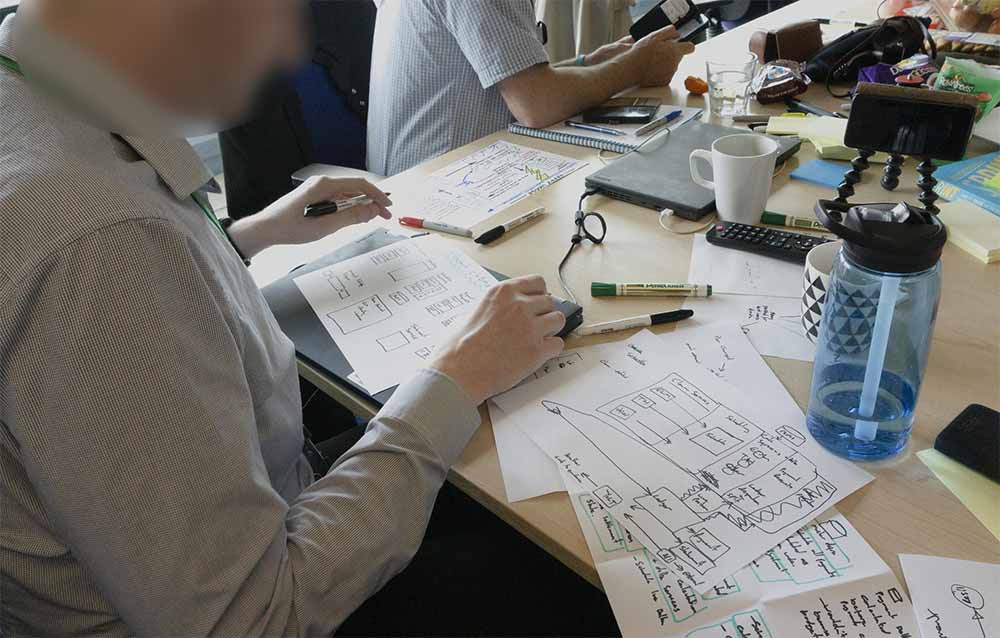
Create & review gallery

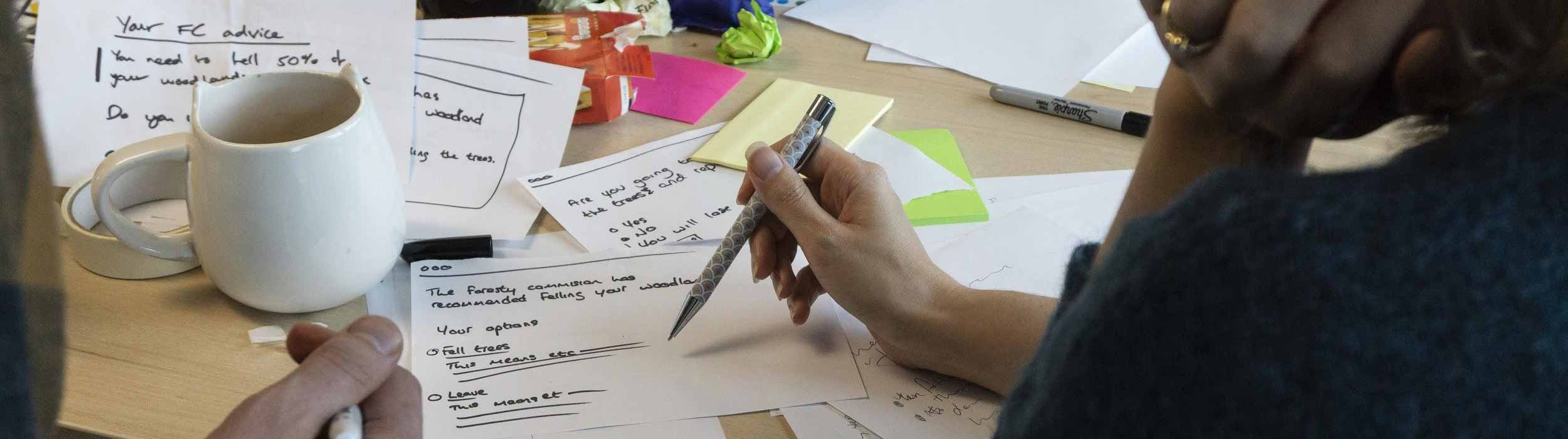
Create a storyboard

Speed critique
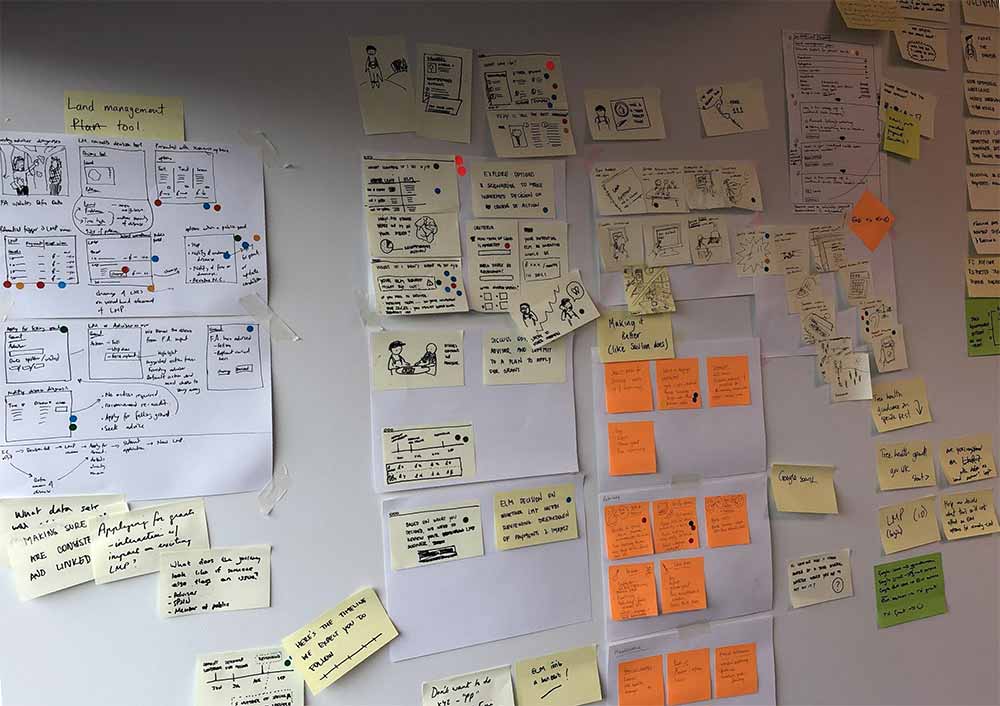
Create the steps
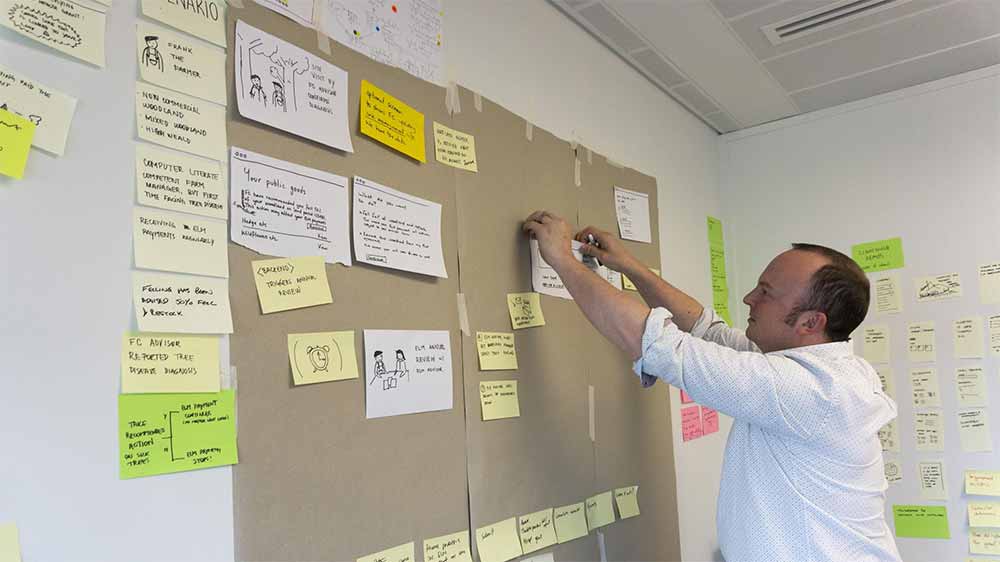

Create the prototype

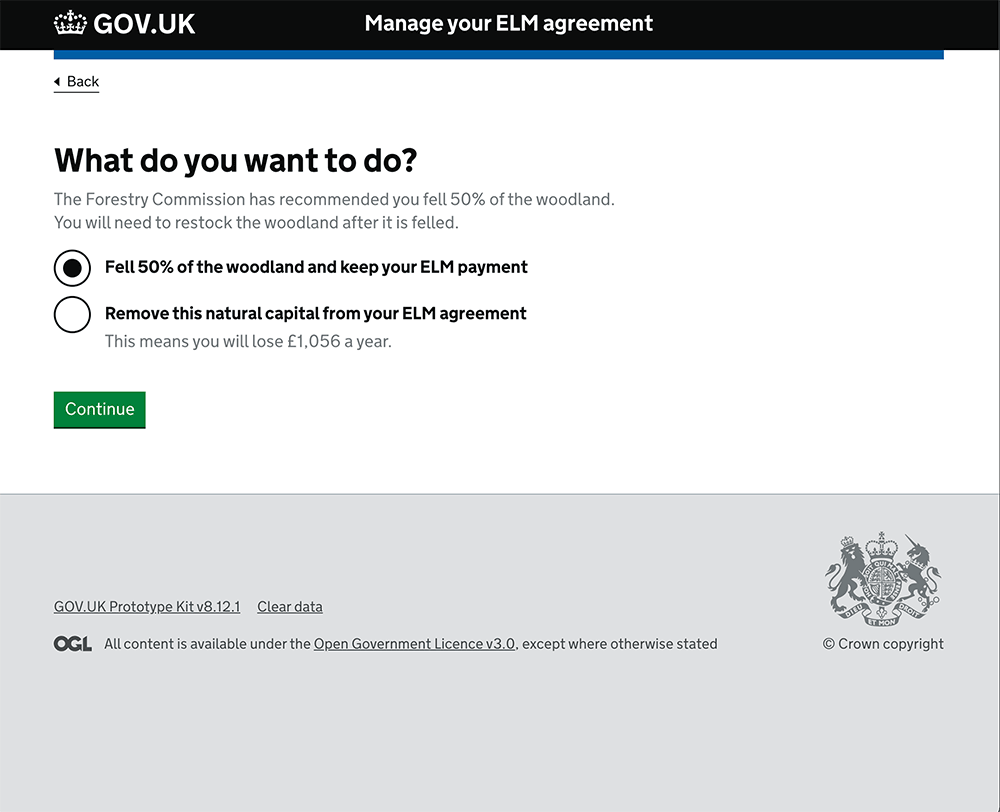
Building the prototype




Test with woodland managers

Unfortunately the final day of user research was delayed pending agreement from senior stakeholders and we didn't get to test our prototype. However we did take many positive learnings from the design sprint.

Outcomes
Despite not being able to test our prototype with users, we felt many of our program and service sprint goals had been achieved:
Program level outcomes
- Successful investigation of how design thinking can be applied to policy design
- Wider awareness created of user centred design methods
- Creation of a reusable workshop format to enable rapid learning across other workstreams
Service level outcomes
- Common understanding developed of the problem space
- Policy discussion across workstreams with rapid decision making
- Team ideation, evaluation and build of a testable idea