
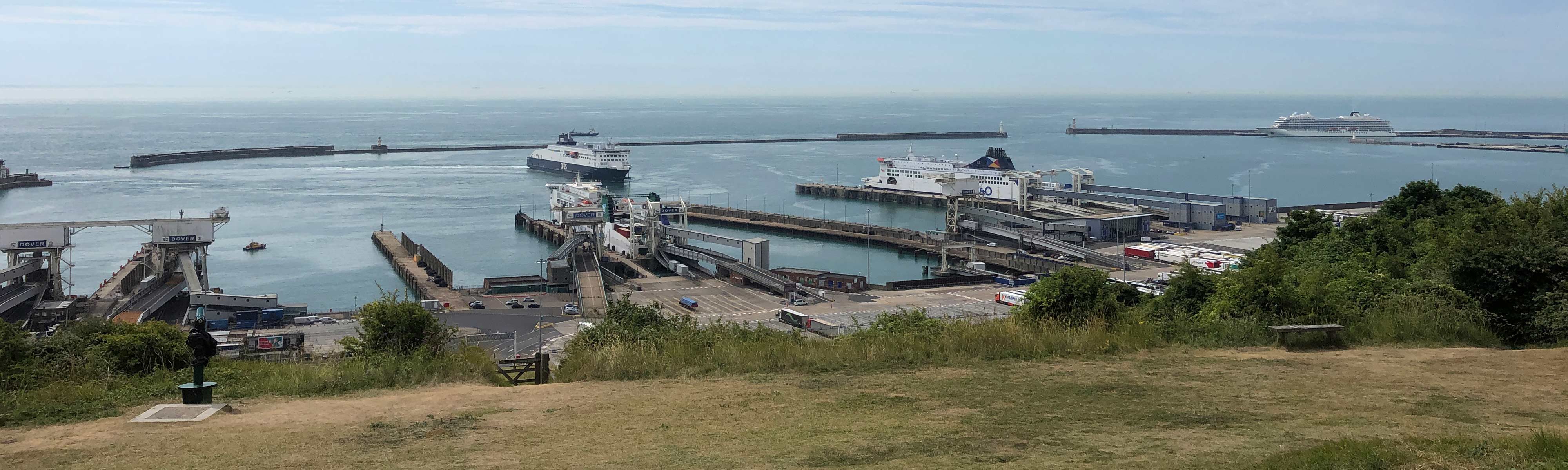
Thousands of goods movements pass through UK borders every day. When critical Borders and Trade systems fail it causes businesses to suffer and creates massive disruption at, and around our ports.
This discovery investigated the issues surrounding service availability and identified opportunities to explore a more user-centred approach to help mitigate disruption.
To meet non-disclosure agreements, information maybe obfuscated. Views written are my own.
Background
The processes, operations and systems that support international UK trade are complex and sit across a broad estate of new and legacy platforms.
There can be many single points of failure and when incidents happen, it can take time to identify the route cause, resolve issues and restore wider operations.
Timely, meaningful updates for businesses are critical.
Goals
To understand:
- the services that businesses use to conduct trade between the UK and the EU
- the users and their experiences across each of the services
- the types and severity of incidents
- broader user needs surrounding service availability issues
- what opportunities exist to better support users when there is a problem with service availability
Service Design
Problem framing
When a discovery begins there can often be a solution in mind which the business is keen to validate.
Ideation and solutionising is an essential part of the wider design process but should be parked during the discovery phase, otherwise it risks a rush to build the wrong thing.
We set time at the start of the project to ensure we had agreed the scope of our discovery, which included defocusing from the envisaged 'dashboard' solution and broadening our investigations to get a better understanding of the problem space.
Method
We had a lot of ground to cover within the 6 week timeframe to understand the breadth of the operational landscape, the people involved and their experiences of service availability issues.
I worked closely with our User Researcher to plan, arrange and conduct the 1-2-1 sessions with participants and on-site visits, which consisted of:
- the services that businesses use to conduct trade between the UK and the EU
- the users and their experiences across each of the services
- the types and severity of incidents
- broader user needs surrounding service availability issues
- what opportunities exist to better support users when there is a problem with service availability
Synthesis & insights
During discovery we synthesised research outputs and layered-on insights to build a clearer picture of:
- the end-to-end experience of service availability issues (internally and externally)
- the operations and process involved for detecting, managing and escalating incidents
- types and prevalence of incidents
- how communications are sent between agencies and businesses and their effectiveness
- how fixes are identified, deployed and services restored
- the immediate and longer term impact of service outages for businesses
Several key artefacts were developed to visualise what we'd learnt to help playback findings to the team and wider stakeholders.
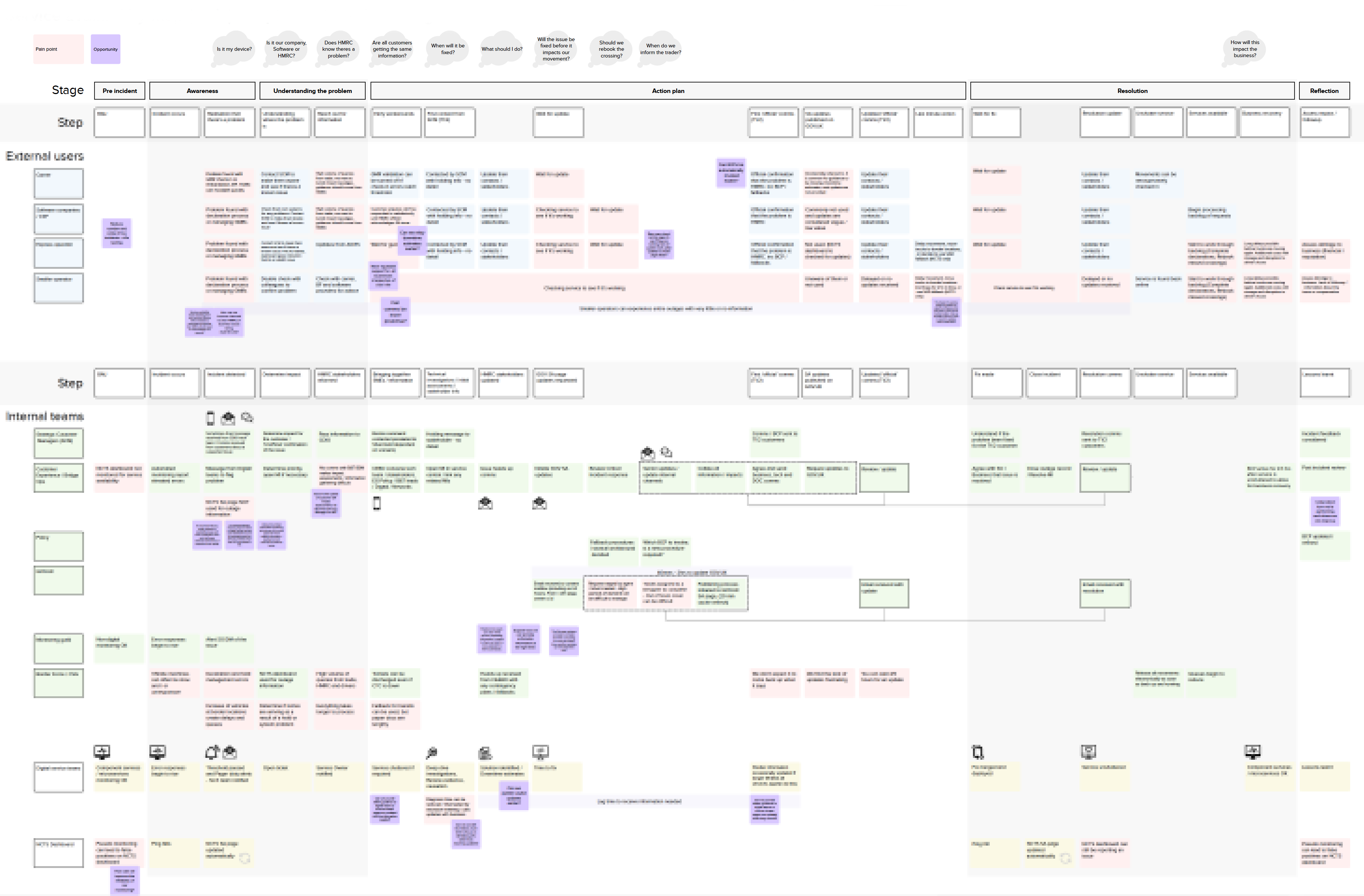
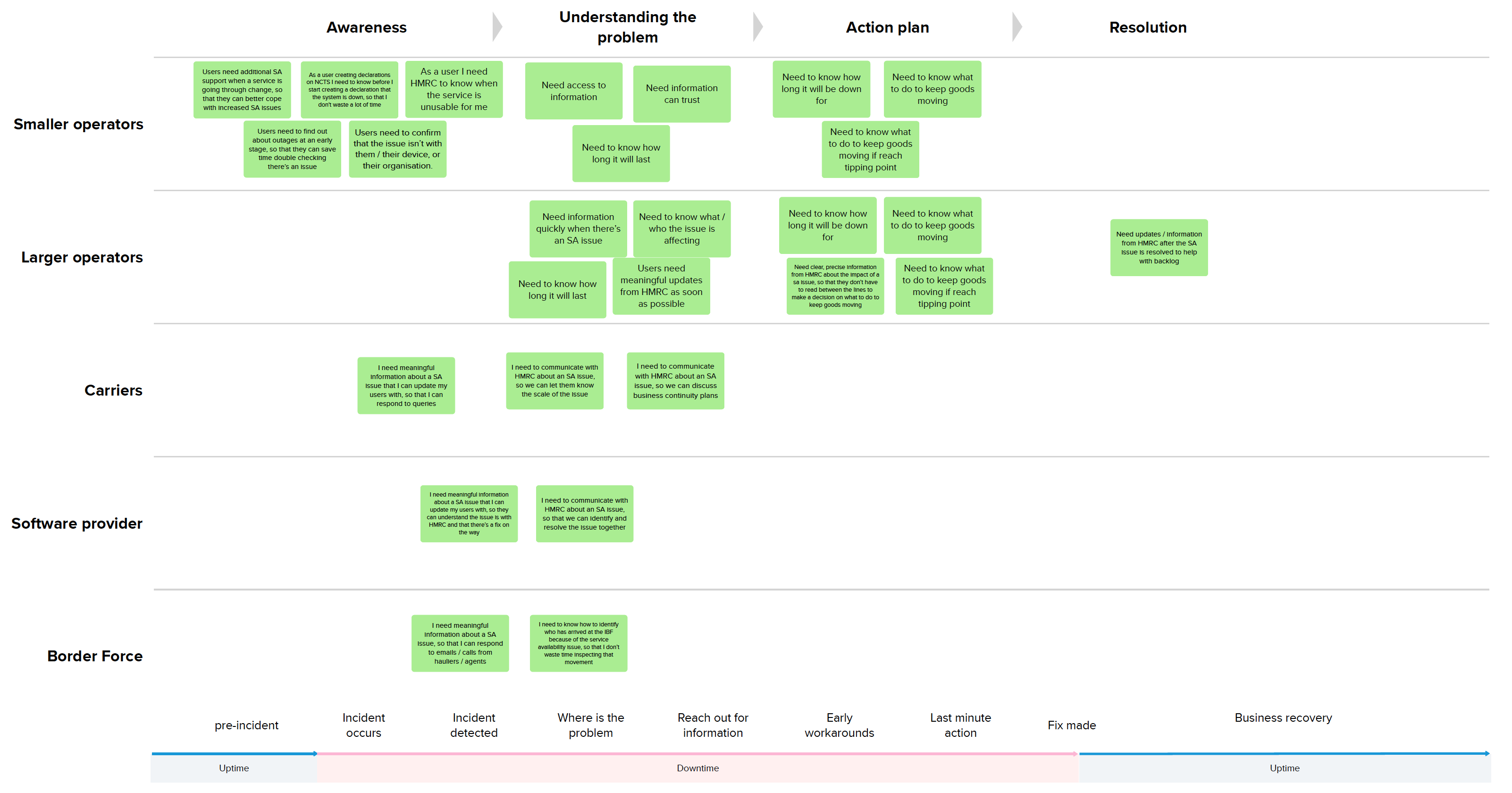
I mapped the user journeys to articulate the stages and issues encountered during a service availability incident.
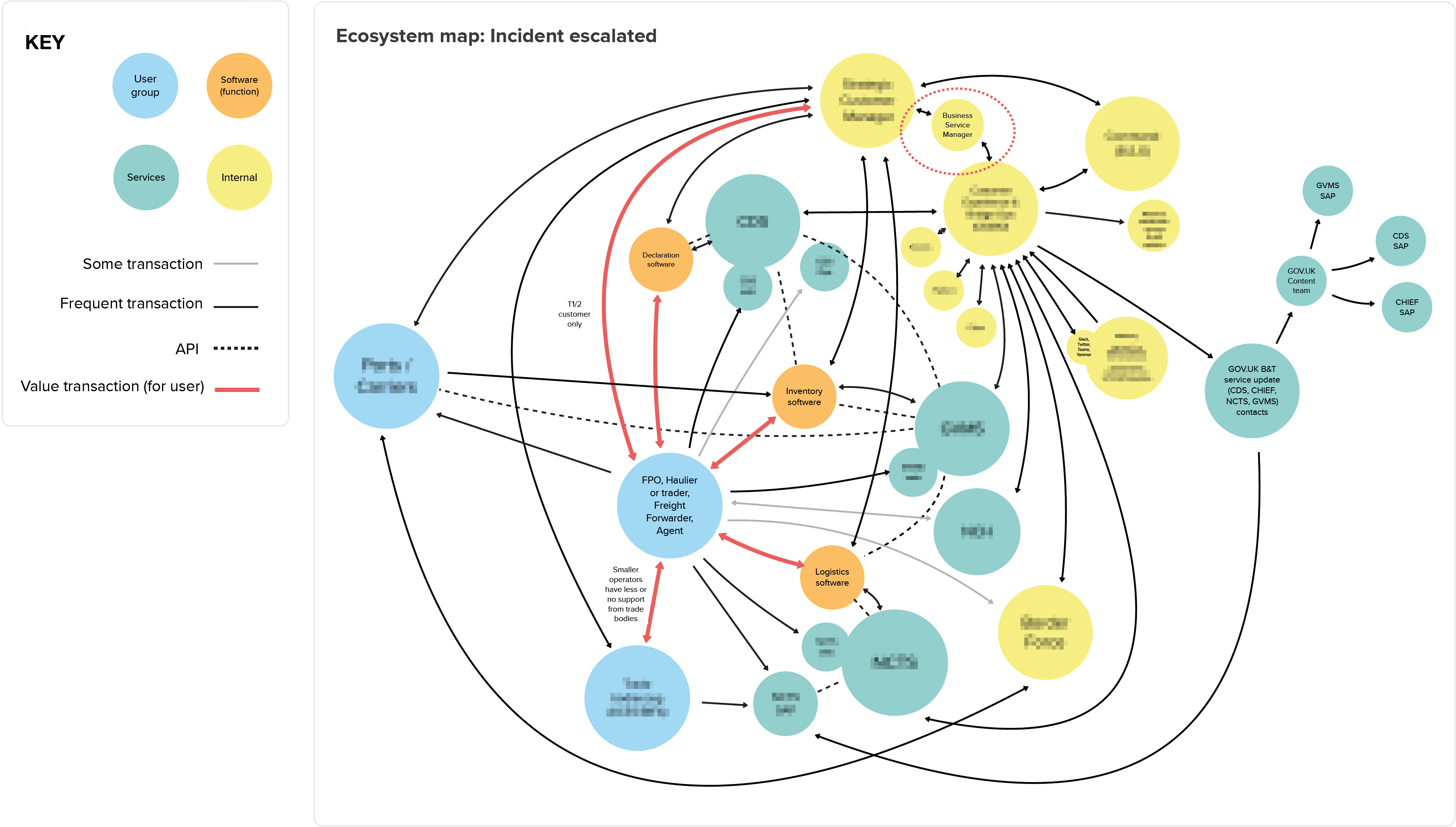
Casting our discovery net wide to understand the people and systems that are impacted by service availability incidents. Creating a map of the ecosystem helped give a high-level view of the dependencies and constraints that surround a major incident as it develops over time. It also helped identify current gaps and areas of opportunity.
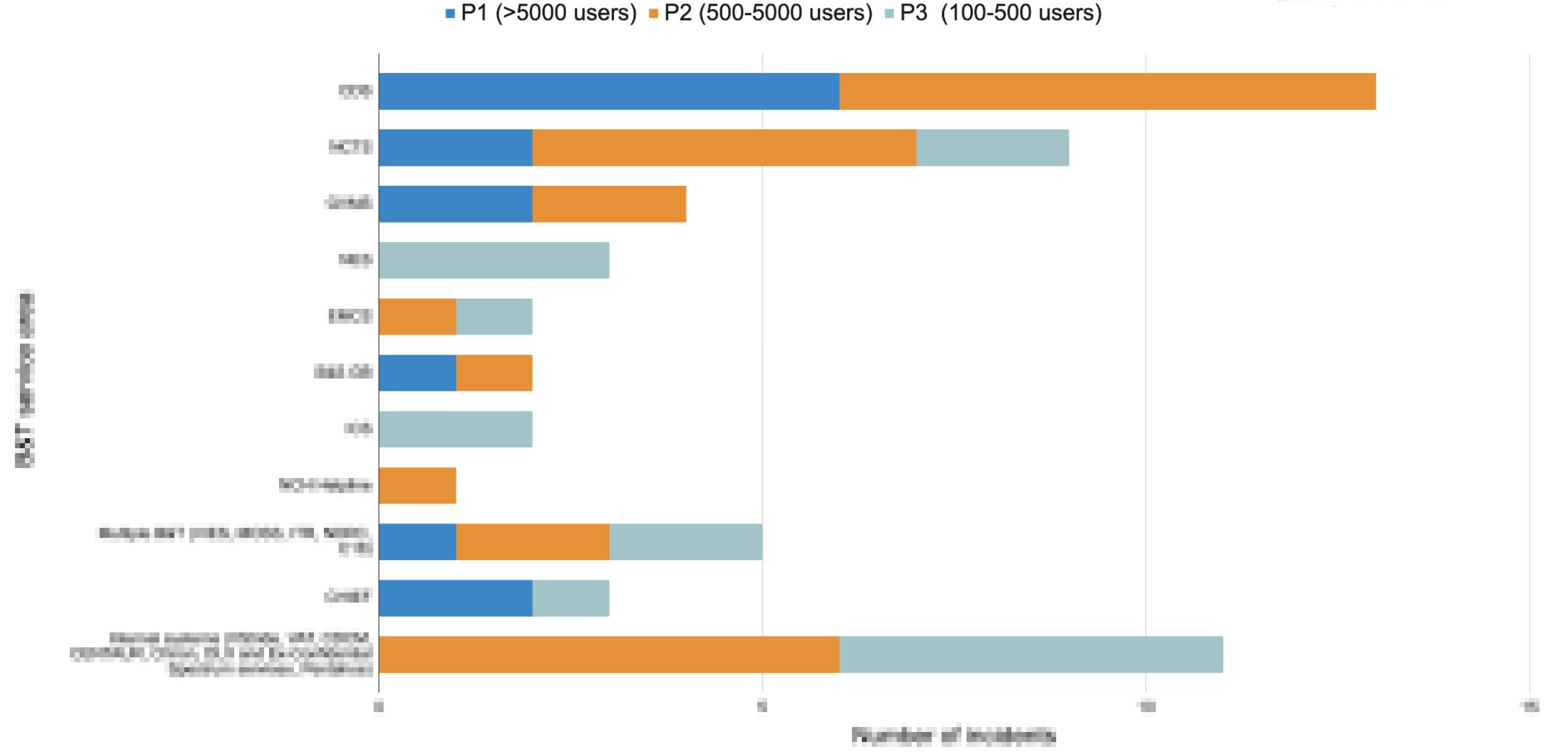
We were fortunate to have access to the national monitoring hub that supported with some specific data requests. This enabled us to dive deep into the data to understand the type and scale of major incidents.
Speaking with internal and external users enabled us to capture common frustrations experienced by traders, hauliers, carriers and front-line Government staff, before, during and after an incident occurs.

With a good understanding of peoples experiences and the environment they worked in, we were able to confidently convey what people needed to mitigate the impact of service availability incidents.
Findings
After we had collated our insights, detailed findings were produced helping to refine the problem statement. These were some of the high-level takeaways:
-
Smaller businesses are less well supported when incidents occur and are more vulnerable to the impact of outages as they tend to receive information later and have less time or ability to use workarounds.
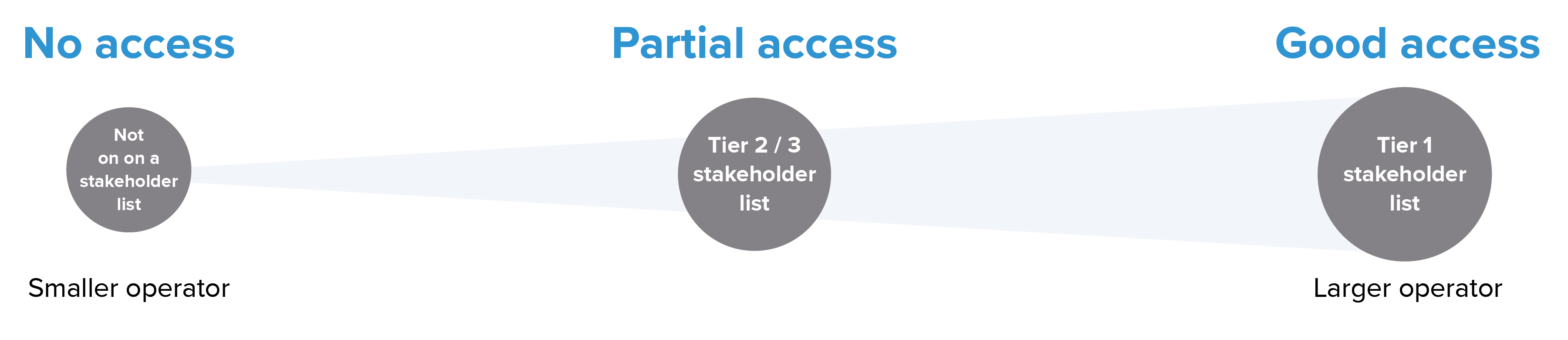
Business size impacts level of support -
Service incidents can be quite common and traders tend to ignore incidents if they think it could be a minor 'glitch' that may correct itself quickly. However problems are exacerbated when outages occur closer to a movement deadline, approaching the 'tipping point'.
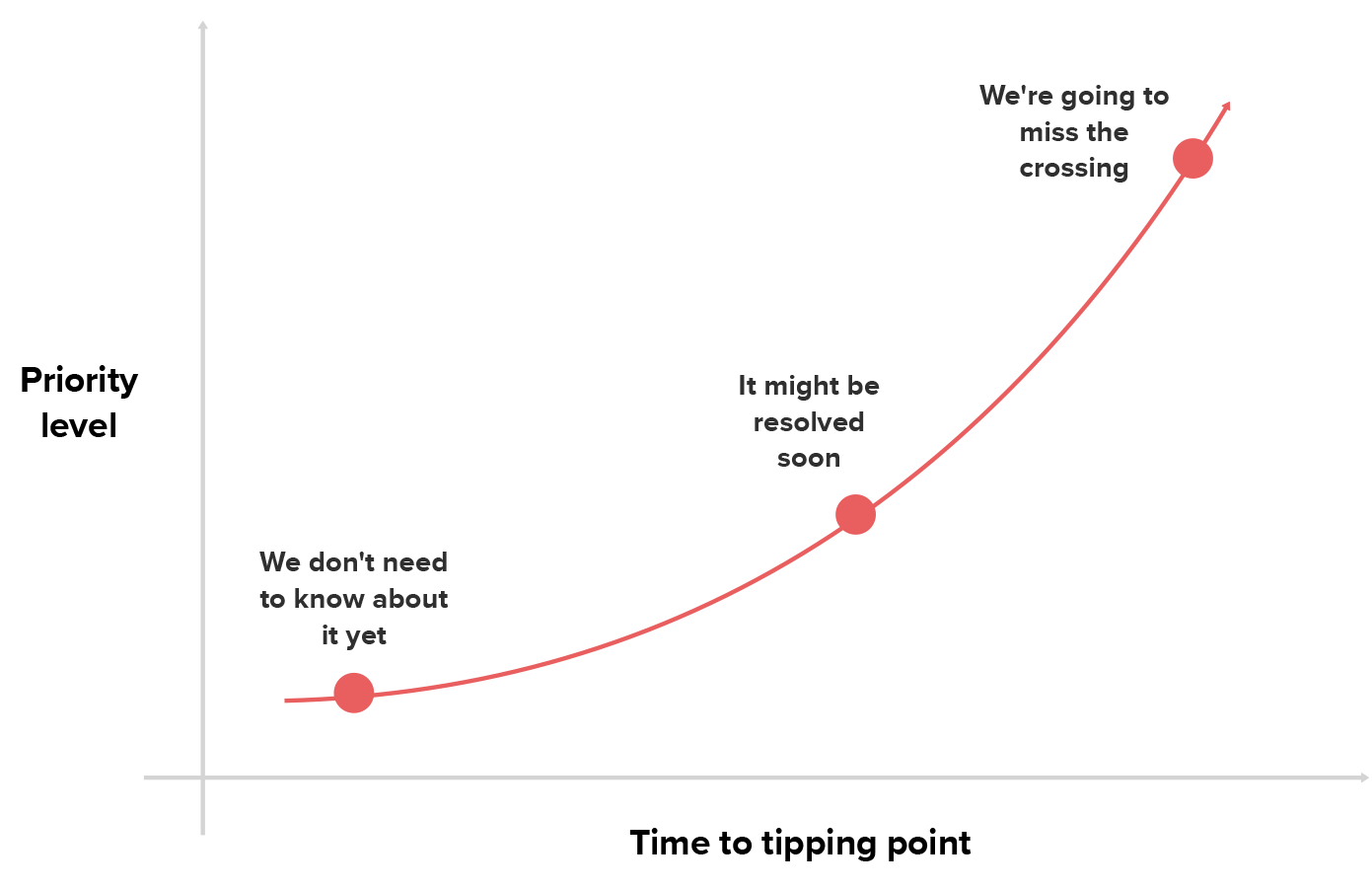
Urgency increases if incidents occur close to a deadline -
Information published on GOV.UK isn’t trusted by businesses (eg Traders and Hauliers) as its slow to update and often unhelpful.
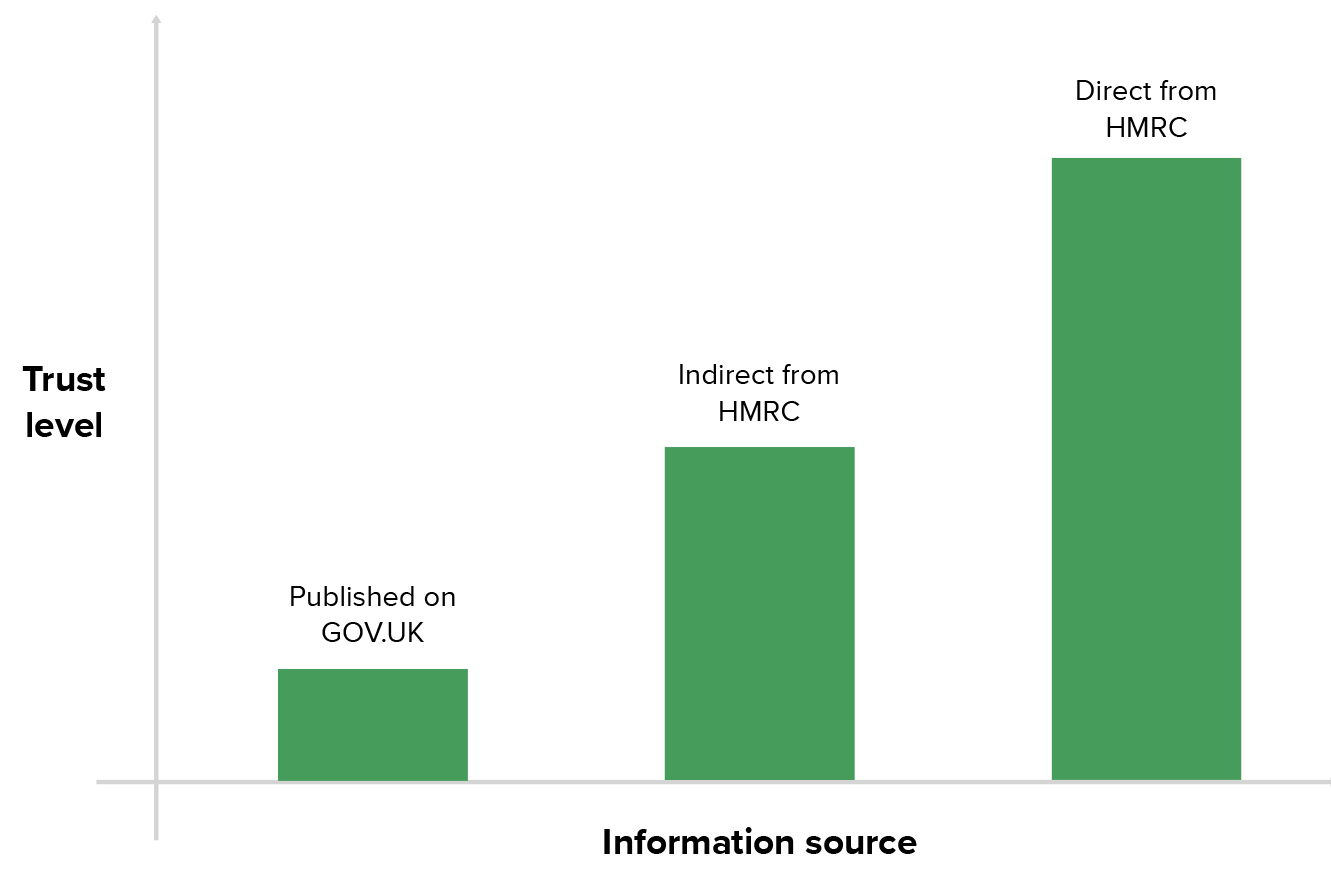
There is generally low trust in service availabilty information published on GOV.UK
Opportunities
To conclude the discovery, and supported by our findings, we focused on opportunities which were articulated and presented to stakeholders for investigation during Alpha (redacted version of the conclusions have been included):
Reduce the number and scale of live incidents
We know many users feel that problems are becoming more frequent with Borders and Trade services which is costly both financially and in terms of loss of credibility and trust. Frequent system and policy updates coupled with low user awareness of those changes has left businesses vulnerable to increased disruption and not knowing what to do when something goes wrong.
Investigate how we can improve collaboration and end-to-end testing with software providers and businesses to identify and fix issues before wider public release, reducing mass disruption, negative media and reputational damage to HMRC.
Proactive communications
We know that most users neither have awareness of existing service availability pages, nor where to find reliable service availability information. Many users often find themselves refreshing the service web channel to understand if a service is available again.
Investigate how businesses might subscribe to receive information and updates directly from HMRC in the event an outage occurs.
Equitable support across all businesses
We know that smaller businesses are often left with little or no support during service outages, resulting in them feeling abandoned and frustrated. The lack of information can exacerbate the impact of the outage in terms of costs and delays and results in longer business recovery times.
Investigate how we can disseminate critical service availability information more equitably, irrespective of the size or type of the business.
Telling HMRC there’s a problem
We know that users can be experiencing business issues relating to service availability problems whilst services are reporting they are technically ok. Due to poor past experiences, the majority of users will simply wait for a fix rather than advise HMRC when they are experiencing an issue.
Investigate channels and touchpoints which could allow businesses to register a problem they are experiencing to help HMRC understand and identify issues more rapidly.
Fewer, more valuable technical updates
We know that when a service availability incident is detected there is pressure for frequent updates from technical SMEs about the route cause and resolution / fix time.
Investigate how we can allow tech teams the time and space to focus on investigating the issue at hand so that meaningful information can be gathered and shared with stakeholders and businesses faster.